
Nighttime Oral Care Routine
A healthy smile doesn’t clock out when you go to sleep. In fact, the hours before bedtime are an important opportunity to remove the food particles, plaque, and bacteria that have accumulated throughout the day. During sleep, saliva production decreases. Because saliva helps rinse away debris and neutralize acids in your mouth, this natural slowdown can leave your teeth more vulnerable to the effects of plaque and bacteria. That makes brushing your teeth at night, flossing, and developing other healthy bedtime habits especially important. Your nighttime oral care routine doesn’t need to be complicated. A few simple, consistent habits can help you improve nighttime oral health and keep your teeth and gums cleaner until morning.
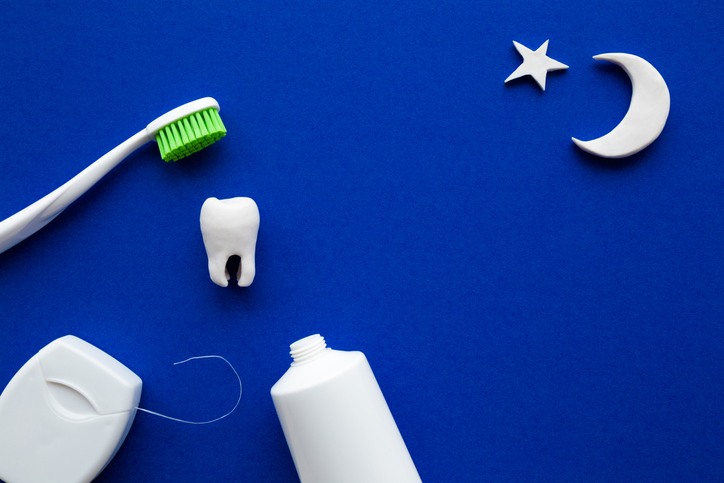
Why Is Nighttime Oral Care So Important?
Throughout the day, bacteria, food particles, sugars, and acids come into contact with your teeth. Saliva provides some natural protection by helping neutralize acids and wash away debris. Once you fall asleep, saliva production slows. If plaque and food debris remain on your teeth overnight, bacteria have an opportunity to produce acids that can affect the enamel. Poor nighttime habits may contribute to problems such as:
- Tooth decay
- Plaque buildup
- Gum irritation
- Bad breath
- Enamel wear
Brush Your Teeth Thoroughly Before Bed
Brushing teeth at night should be one of the foundations of your oral hygiene routine. Instead of rushing through the process because you’re tired, take the time to thoroughly clean every area of your mouth.
Use a soft-bristled toothbrush and fluoride toothpaste, and brush for approximately two minutes. Pay attention to the fronts, backs, and chewing surfaces of each tooth, including the back molars and areas around the gumline. Gentle circular movements can clean your teeth without the aggressive scrubbing that may irritate your gums.
Don’t Forget to Floss
Your toothbrush cannot effectively clean every area between your teeth. Flossing helps remove food particles and plaque from these hard-to-reach spaces and below the gumline. Make flossing part of your routine rather than something you do only when you notice food stuck between your teeth. Traditional dental floss is not your only option. Depending on your needs and your dentist’s recommendations, alternatives may include floss picks, water flossers, or other interdental cleaning tools.
Consider Mouthwash Before Bed
Using mouthwash before bed can be another useful part of an oral hygiene routine. Certain rinses can complement brushing and flossing by helping reduce bacteria, freshen breath, or provide additional fluoride protection. Not every mouthwash is appropriate for every person. Some products are intended for specific needs, such as cavity prevention, sensitivity, or gum concerns. Your dentist can help you decide which option best fits your oral health needs.
Clean Your Tongue
Your teeth aren’t the only surfaces that need attention before bedtime. Bacteria and food debris can accumulate on your tongue and contribute to unpleasant breath. You can gently clean your tongue with a toothbrush or tongue scraper, working from the back toward the front. It only adds a few moments to your routine, making tongue cleaning an easy addition to your nightly oral hygiene habits.
Skip Sugary Late-Night Snacks
A bedtime snack can be tempting, but what you eat and drink after completing your nighttime oral hygiene routine matters. Sugary and starchy foods provide fuel for bacteria, while acidic beverages can affect tooth enamel. If you eat after you’ve already brushed your teeth, brush again before going to sleep. Water is the better beverage choice during the night. This habit can also make your nighttime routine easier to maintain because you won’t have to repeat it after another snack or drink.
Stay Hydrated
Dry mouth is more than an uncomfortable feeling. Saliva plays an important role in washing away food particles and neutralizing acids, so reduced saliva can make the mouth more vulnerable to dental problems. Drink enough water throughout the day and choose water instead of sugary or acidic drinks at bedtime. Persistent dry mouth can sometimes be associated with medications or medical conditions. If dry mouth regularly wakes you up, makes swallowing difficult, or causes ongoing discomfort, talk to your dentist about your symptoms and appropriate options for managing them.
Pay Attention to Possible Teeth Grinding
A complete nighttime routine involves more than cleaning your teeth. It’s also important to consider what happens to them while you’re asleep. Teeth grinding, also called bruxism, can occur during sleep and may contribute to worn enamel, cracked teeth, jaw discomfort, or headaches. Because it happens while you’re sleeping, you may not know you’re doing it until symptoms develop or your dentist notices signs of wear. If you regularly experience morning jaw soreness or headaches, mention the symptoms during your next dental appointment.
Keep Your Toothbrush in Good Condition
Even excellent brushing technique is less helpful if the toothbrush itself is worn. Replace your toothbrush or electric toothbrush head periodically and sooner if you notice that the bristles are visibly frayed. We recommend replacing it every three to four months or sooner when the bristles become worn. You can make this easier to remember by keeping replacement brush heads or toothbrushes on hand.
Can Better Oral Hygiene Improve Sleep Quality?
Signature Smiles Dentistry doesn’t want patients to think brushing, flossing, or using mouthwash are treatments for sleep disorders. Dry mouth, jaw soreness associated with grinding, and other dental concerns may become especially noticeable overnight or upon waking. If dental discomfort interferes with your nighttime routine or rest, speak with your dentist. If you experience persistent sleep difficulties, snoring, breathing interruptions during sleep, or significant daytime fatigue, discuss those symptoms with an appropriate healthcare professional.
Improve Your Nighttime Oral Health With Us
Signature Smiles Dentistry offers complete dental services and care to help boost your nighttime oral health. If you’re ready to improve nighttime oral health or have questions about the best products and techniques for your smile, contact us today to schedule a dental appointment. Our team can provide personalized recommendations to help you protect your teeth and gums day and night. Reach out to schedule a consultation.