
Impact of Screen Time and Snacking on Kids’ Oral Health
The Screen and Snack Connection: What It Means for Your Child’s Smile
Parents ask us about a lot of things at Signature Smiles Dentistry, but one pattern has become impossible to ignore: the connection between kids’ dental problems and screen time habits, as well as the snacks that tend to go along with them. It’s not the tablet or the TV causing cavities, but what happens around it: hours of grazing on crackers, juice boxes, and gummy snacks while attention is locked on a screen instead of on how much or how often a child is eating. We see more enamel damage in children now than we did a decade ago, and screen habits are a big part of why. However, this is one of the more fixable issues we see in pediatric dentistry, and a few changes to routine can make a difference.
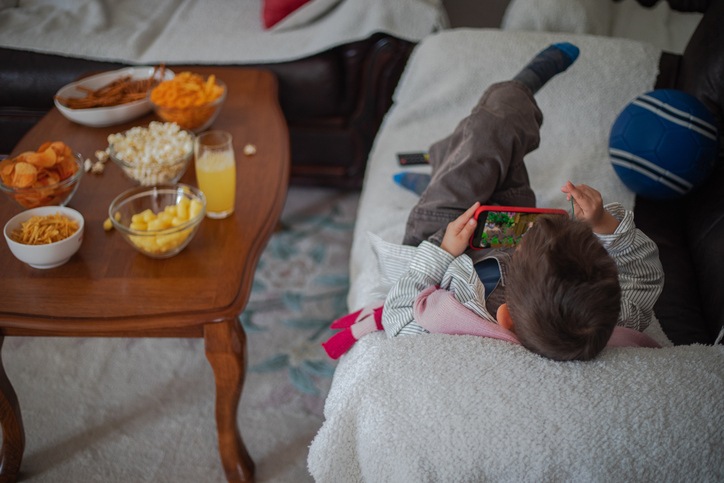
Why Screen Time Changes Snacking Behavior
Kids who are watching a show or playing a game tend to eat differently than kids sitting at a table for a meal. Snacking becomes mindless. A bowl of crackers or a juice box gets refilled without anyone noticing how much time has passed or how many times a child has eaten that hour. This is where the link between snacking and tooth decay in children becomes clear. It’s rarely the amount of sugar in one sitting that causes the most damage and results in needing a cavity filling. It’s the frequency of exposure throughout a two- or three-hour screen session.
Every time a child eats or drinks something sugary or starchy, the bacteria in their mouth produce acid that attacks tooth enamel. Saliva needs time, usually 20 to 30 minutes, to neutralize that acid and start repairing the enamel. This is one of the clearest examples of how screen time affects kids’ oral health: if a child is sipping juice or nibbling crackers every few minutes during a show, that repair window never opens.
The Snacks Parents Don’t Expect to Be a Problem
Fruit snacks, crackers, pretzels, granola bars, and juice boxes are the most common screen-time companions, and most parents are surprised to learn how much these foods contribute to tooth decay. Fruit snacks are essentially sugar and gelatin, and they’re sticky enough to cling to molars for a long time. Crackers and pretzels break down into simple sugars almost immediately in saliva. Because kids tend to eat them slowly over an extended period, the acid exposure stretches out rather than happening all at once.
Juice is its own issue. Many parents assume juice is a healthier alternative to soda, but from a dental standpoint, juice sipped slowly over an hour can be worse than a soda finished in five minutes, simply because the sugar sits on the teeth longer. When combined with snacking, this becomes a significant driver of enamel damage in children, especially in the back molars, where grooves trap food and bacteria.
What Enamel Damage in Children Looks Like
Enamel damage in children is rarely a visible cavity. Early signs are subtler: white or brown spots near the gumline, increased sensitivity to cold drinks, or a slightly rough texture on the tooth surface. By the time a cavity is visible or a child complains of pain, the decay has usually been developing for a while. This is part of why dentist advice for kids’ screen time snacking habits tends to focus on prevention rather than correction. Catching enamel changes early, during a routine checkup, is far easier and less invasive than treating a cavity that’s already formed.
Tips to Improve Children’s Oral Hygiene Habits
Parents don’t need to eliminate screen time or snacks to protect their kids’ teeth. Small structural changes to when and how snacking happens tend to be more effective than strict bans, which are hard to maintain and often backfire. Some of the tips to improve children’s oral hygiene habits we recommend most often include:
- Setting a snack time before or after screen time, rather than during it
- Offering water instead of juice or flavored drinks during shows or games
- Choosing snacks that clear the mouth quickly, like cheese or fresh fruit, over sticky or starchy options
- Rinsing with water or brushing teeth after a snack session
- Keeping juice boxes and sippy cups out of reach during long stretches of screen time
Bring Your Child in for a Checkup at Signature Smiles Dentistry
Every kid’s habits are a little different, and what causes decay in one child might not affect another the same way. That’s part of why regular checkups matter so much for growing teeth. At Signature Smiles Dentistry in Parker, CO, we look for early signs of enamel damage in children well before they turn into cavities, and we’re happy to walk parents through habits that fit their family’s routine. If it’s time for your child’s next visit, reach out to schedule an appointment.